
Above-normal heatwave days are predicted in most parts of central, east and northwest India during this period.

A blinding layer of dense fog over north India, including Delhi, caused major inconvenience to commuters. The visibility levels were 50 metres around 5:30 am.

A fresh spell of heatwave is likely to begin over northwest India from May 7 and over central India from May 8, the India meteorological department said on Thursday.

Despite high exposure to floods, Assam, Bihar, Uttar Pradesh, Odisha, and Sikkim are the best performing states in terms of flood early warning systems (EWS), according to the report by independent policy research think tank The Council on Energy Environment and Water.

Dense fog continued to hit flight operations at the Indira Gandhi International airport for the second consecutive day on Thursday, disrupting the schedules of nearly 80 domestic and international flights. "Since Wednesday night, 27 domestic and international flights have been diverted, 18 have been cancelled and nearly 20 have been rescheduled, as thick fog blanketed the airport, reducing the runway visibility to 150 metres or less," an airport official said.

India should have learnt lessons from the 1962 war but no headway was made in the development of border infrastructure till 2014, he claimed, adding that the Modi government increased the budget for the same from Rs 3,500 crore to Rs 14,500 crore.

The weather department attributed the unusual heat to the lack of rainfall due to the absence of active western disturbances over north India and any major system over south India.

Delhi's primary weather station, the Safdarjung Observatory, registered a maximum temperature of 40.4 degrees Celsius, four notches higher than normal.

ESU coach Ngampao Kipgen, a member of the Kuki tribe, told Reuters he was forced to flee to the hills with his family after his house was burned down.

The mean maximum temperature for the month of March was 28.2 degrees Celsius in 2020 and 2019. It was 32.8 degrees Celsius in 2018; 30.7 degrees Celsius in 2017 and 31.5 degrees Celsius in 2016, according to the India Meteorological Department data.

The India Meteorological Department has issued an 'orange' alert.
The forecast said there could be a slight fall in minimum temperature in the next couple of days. Isolated to scattered showers are also expected in the capital in the next 24 hours.

Delhi is staring at a water crisis amid the rising heat, with the water levels at the Wazirabad pond depleting alarmingly due to less flow in the Yamuna, officials said.

A sudden change in weather brought respite to the residents of national capital New Delhi as gusts of wind carrying thick dust blew across the region on Saturday afternoon.

With the fight now having been taken to the seizure of nuclear plants, it is one more warning to Europe that this prolonged war could end up with disastrous consequences, observes Rashme Sehgal

Very dense fog lowered visibility to 50 metres at the Palam observatory, near the Indira Gandhi International airport, at 5:30 am.

A severe cold wave brought the minimum temperature down to a numbing 1.5 degrees Celsius at the Ridge weather station in central Delhi.

Delhi recorded a cold wave for the second consecutive day on Friday, with the minimum temperature at Ayanagar in southwest Delhi plunging to a numbing 1.8 degrees Celsius.

This was the lowest minimum temperature recorded in the city since 1991, when the mercury had fallen to minus 11.4 degree Celsius.

Temperatures in March will be critical to determining the impact of any unusual heatwave conditions on this year's wheat crop in North India. It is that time of the year when the crop enters its vital grain-filling stage, say meteorologists and crop experts. So far, the high day temperatures in the North are not believed to have any significant impact on the final yields since the crop hasn't entered a stage where heat affects yields.

Delhi's minimum temperature on Wednesday morning plunged to 4.4 degrees Celsius -- the season's lowest -- making the national capital colder than Dharamsala, Nainital and Dehradun.

The maximum temperature at the Safdarjung Observatory, Delhi's base station, is likely to rise to 45 degrees Celsius.

Cooler weather meant that demand for milk products and value-added items like buttermilk and ice-cream did not show the usual rise.

'What we are seeing is some bursts of a cold wave.' 'It comes, troubles you for three-four-five-days and thereafter relaxes for another few days.' 'And then another fresh one (cold wave) comes.'
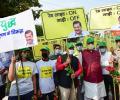
According to the Central Pollution Control Board's mobile application SAMEER, the city recorded an air quality index of 168, which falls in the 'moderate' category, much better than Monday's AQI of 221, which falls in the 'poor' category.

The mercury in Delhi, which recorded its hottest day of the year so far at 45.6 degrees Celsius on Sunday, came down to 42.4 degrees Celsius, according to the India meteorological department.

India's engagement with China is "complex" and Chinese attempts to unilaterally alter the status quo along the Line of Actual Control (LAC) in eastern Ladakh starting from April-May 2020 seriously disturbed the peace and tranquillity in border areas, the ministry of external affairs (MEA) said in a report on Monday.

The first One-Day International between India and South Africa in Dharamsala on Thursday was abandoned due to rain without a ball being bowled. It was the second match in less than six months to be abandoned at the Himachal Pradesh Cricket Association (HPCA) Stadium because of inclement weather.

A Korean couple and a retired Army Major General were among 310 people rescued by Chandigarh-based 12 Wing of the Indian Air Force, which has been conducting non-stop sorties during the past three days to evacuate people from flooded areas of Srinagar.

A 45-year-old Maratha quota activist allegedly committed suicide in Bandra area of Mumbai in the early hours of Thursday leaving behind a note in which he urged community members to fight for the cause, a police official said.

The permission to allow the Chinese ship comes amid strains in ties between India and Maldives after its new President Mohamed Muizzu came to power and made Beijing as his first port of call early this month after assuming office.

Large parts of north India reeled under numbing cold on Tuesday with the mercury remaining below freezing point at most places in Jammu and Kashmir, while dense fog in the early hours of the morning hit road and rail traffic movement.

Gujarat Congress president Jagdish Thakor and other Congress leaders rushed to Ahmedabad Airport after learning about his arrest and shouted slogans against the Bharatiya Janata Party government.

'If you look at the entire 60-day period of March and April, you see that temperatures were soaring more than 3.5 degrees Celsius above the maximum temperature.' 'Normally, events like this happen only for a short period.'
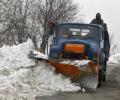
The Srinagar-Jammu national highway, the only all-weather road linking Kashmir to the rest of the country, was closed for vehicular traffic as the valley including Srinagar experienced fresh snowfall on Wednesday.

The Northern Railways said it has cancelled around 17 trains and diverted around 12 others, while traffic has been suspended at four locations due to waterlogging.
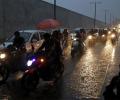
The southwest monsoon which reached the country on May 30 well within its normal onset date

The deadlock continues as the seventh round of talks with the Centre remained inconclusive, with the farmer groups sticking to their demand for the repeal of the three new laws, and the government listing out various benefits of the new Acts.
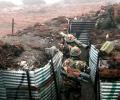
The chief engineer of 'Project Vartak', Brig Raman Kumar told ANI that the Border Roads Organisation (BRO) is developing and maintaining all road networks in the key border areas of western Assam and western Arunachal Pradesh.
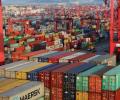
After the first quarter was washed out, exporters are now keeping their fingers crossed over a turnaround in outbound shipments to at least North America from September onwards. This comes even as other key destinations such as Europe may take longer to revive in FY24. Slowdown in key economies, as well as geopolitical tensions resulted in sluggish demand for Indian goods.
